




Most dogs benefit from professional dog grooming every 4 to 12 weeks, but there is no single schedule that suits every pet. Long, curly or continuously growing coats generally need appointments every 4 to 6 weeks, while many short-haired dogs may only require professional grooming every 8 to 12 weeks. The right interval depends on coat type, shedding pattern, daily activity, health and how consistently the dog is maintained at home.
Professional dog grooming is not only about appearance. A suitable routine helps prevent painful matting, controls loose hair, keeps nails at a comfortable length and makes it easier to notice changes in the skin, ears, paws or coat. The objective is to schedule grooming before discomfort or coat damage develops.
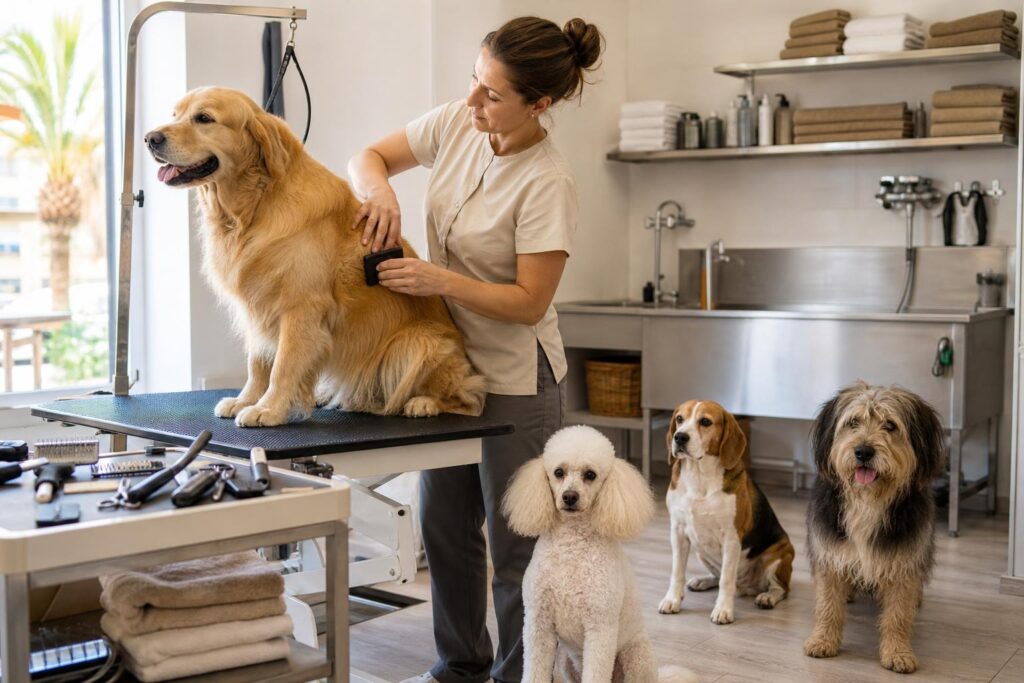
Dog grooming by coat type: why it matters more than size
Breed can provide a useful starting point, but coat characteristics are usually more important than body size. Two dogs of similar size may have completely different grooming needs: one may have a smooth, low-maintenance coat, while the other has continuously growing hair that tangles easily.
Curly and continuously growing coats: every 4 to 6 weeks
Poodles, Bichon-type dogs and many curly-coated or mixed-breed dogs need frequent professional attention. Their coats tend to retain shed hair rather than releasing it naturally, which can lead to compact knots close to the skin.
A 4-to-6-week schedule is often practical when the dog wears a styled or moderately long coat. A shorter trim may allow slightly longer intervals if regular brushing and combing are carried out correctly at home. However, extending the time between appointments without proper maintenance increases the likelihood of matting.
A common mistake is brushing only the surface. The coat may look fluffy while tangles develop underneath, particularly behind the ears, in the armpits, around the collar and on the legs. A metal comb should pass gently from the skin to the ends without catching.
Long and silky coats: every 4 to 8 weeks
Yorkshire Terriers, Maltese dogs, Shih Tzus and other long-coated breeds often need grooming every 4 to 8 weeks. The exact interval depends on coat length, texture and the amount of home care provided.
Dogs kept in a practical shorter trim may be comfortable toward the longer end of that range. Full or flowing coats usually require more frequent appointments, careful brushing and attention to areas exposed to food, moisture and friction.
For example, a long-haired dog that wears a harness daily may develop knots around the chest and under the front legs more quickly than expected. In this type of situation, coat length and grooming frequency should be adjusted to the dog’s real routine rather than to an ideal appearance that is difficult to maintain.
Double coats: every 6 to 12 weeks, with seasonal adjustments
Breeds such as Golden Retrievers, German Shepherds, Border Collies and many spitz-type dogs have a protective outer coat and a softer undercoat. Professional grooming every 6 to 12 weeks can help remove loose undercoat, improve coat condition and prevent compacted shedding.
More frequent deshedding may be useful during seasonal coat changes. These dogs generally should not be shaved simply to reduce shedding or help them cope with warm weather. Clipping a healthy double coat can change its texture and regrowth. Any decision to clip it should have a clear welfare, coat-management or veterinary reason.
Wire coats: approximately every 6 to 10 weeks
Many terriers and wire-coated breeds benefit from grooming every 6 to 10 weeks. The appropriate technique depends on whether the goal is easy pet maintenance or preservation of the coat’s traditional texture.
Clipping is practical for many companion dogs, while hand stripping removes mature hairs and can help maintain a firmer texture and colour. Hand stripping is not automatically suitable for every dog: coat condition, skin sensitivity, age, behaviour and the owner’s maintenance goals should all be considered.
Short, smooth coats: every 8 to 12 weeks
Short-haired dogs may not need haircuts, but they still benefit from periodic bathing, nail trimming, ear checks and removal of loose hair. A professional appointment every 8 to 12 weeks is a reasonable starting point for many healthy dogs.
Some short-coated breeds shed heavily, have sensitive skin or develop noticeable odour sooner. In those cases, the schedule may need to be shortened. Frequent bathing should use appropriate products and techniques, as unsuitable shampoos or incomplete rinsing can irritate the skin.
A practical method for choosing your dog grooming interval
Rather than relying only on a breed label, assess the following five factors. The shortest interval indicated by any one of them is often the safest starting point.
- Identify the coat structure. Determine whether it is curly, silky, wiry, smooth or double-coated, and whether it grows continuously or sheds naturally.
- Choose a realistic coat length. Longer styles require more frequent appointments and considerably more home maintenance. A manageable trim is often better for an active dog or a family with limited brushing time.
- Measure lifestyle exposure. Swimming, beach visits, muddy walks, rural environments and frequent harness use can increase tangling, trapped debris and the need for bathing or brushing.
- Evaluate home care honestly. Brushing frequency is not the only issue; technique and tools matter. If a comb cannot pass through the coat, the dog may need professional attention sooner.
- Review the result after each appointment. If tangles, overgrown nails or discomfort appear before the next visit, shorten the interval. If the coat remains healthy and manageable, the schedule may be appropriate.
How lifestyle changes your dog grooming schedule
An indoor dog with a short coat and moderate daily walks will not have the same needs as a long-coated dog that swims regularly or explores scrubland. Active dogs often collect seeds, dust, moisture and plant material around their paws, ears, tail and underside.
Dogs attending day care or spending time with other dogs may also need more regular coat checks because play creates friction and can accelerate tangling. This does not necessarily mean they need a full groom after every busy week. Brushing, paw care or a maintenance bath may sometimes be sufficient.
Climate should also influence the plan. In warm areas such as Alicante, owners may understandably want a very short summer cut. However, shorter is not always safer. The coat can provide some protection from sunlight and environmental exposure, and close clipping may leave pale or sensitive skin vulnerable. The best approach depends on coat type, skin condition, activity and the dog’s ability to cope with heat.
Signs that the next appointment should be sooner
- The comb catches repeatedly or cannot reach the skin.
- Knots are forming behind the ears, under the legs or around the collar and harness.
- Nails touch the floor when the dog is standing or alter its natural gait.
- The coat remains damp for a long time after bathing or swimming.
- There is persistent odour despite normal home care.
- Hair around the eyes, paws or sanitary areas is causing discomfort or hygiene problems.
- The dog scratches, licks or chews particular areas more than usual.
Changes such as redness, sores, swelling, hair loss, strong ear odour or persistent itching should not simply be treated as grooming issues. A groomer may notice them, but diagnosis and treatment belong to a veterinarian, as the general principles of dog grooming also recognise. Grooming may also need to be postponed or modified until professional veterinary advice has been obtained.
Why waiting too long makes dog grooming more difficult
Long gaps between dog grooming appointments can turn a routine groom into a longer and less comfortable process. Severe matting pulls on the skin, traps moisture and may conceal irritation. Attempting to brush out compacted knots can be painful, so a short clip may be the most humane option even when the owner would prefer to preserve coat length.
Behaviour can also be affected. A dog groomed only after its coat has become uncomfortable may associate the salon with prolonged handling and knot removal. Predictable appointments, combined with calm home handling of paws, ears and coat, usually create a more manageable routine.
An illustrative example is a curly-coated dog booked every ten weeks while receiving only occasional surface brushing. Matting repeatedly appears around the legs and ears, requiring a shorter haircut. Moving to a five- or six-week schedule, or choosing a consistently shorter style, would better match the dog’s actual maintenance needs.
Puppies, senior dogs and dogs with additional needs
Puppies should be introduced gradually to grooming once it is appropriate for their health and vaccination status. Early sessions can focus on positive exposure to the table, dryer, brush, nail handling and gentle trimming rather than achieving a complex finished style.
Senior dogs may benefit from shorter, more frequent appointments instead of occasional long sessions. Arthritis, reduced stamina, skin changes and difficulty standing should influence the technique and timing. Dogs with anxiety, previous negative experiences or handling sensitivities may also require a gradual plan coordinated with a qualified trainer or veterinarian where appropriate.
Finding a sustainable routine for your dog
The best dog grooming schedule is one that protects the dog’s comfort and can be maintained consistently. Start with the typical range for the coat, then adjust it according to coat length, shedding, activity, skin health and the quality of home maintenance. Do not wait for visible matting or overgrown nails to confirm that the interval was too long.
At Dirty and Happy in Los Montesinos, professional dog grooming can be considered alongside a dog’s wider routine, including day care, training and accommodation needs. A professional assessment of the coat and lifestyle can help owners choose an interval and style that are practical, comfortable and appropriate for the individual dog.


